In this post we were prompted to write an essay, where we had to:
- Identify a particular cinematograhic technique across the 5 films.
- Examine the ways in which it is used while using examples from the films
- Discuss the nature and function of this technique (How is it similar and how does it differ?/)
- Any conclusion towards my own filmmaking?
The cinematographic technique, I decided to focus on was lighting and colour. Since lighting "is more than just a visual style: it is inherently a part of the storytelling, an integral narrative device."
Eraserhead

In "Eraserhead" directed by David Lynch in 1977, the film itself follows a quite unusual storyline. Having as the main character, a young man called Henry, who is forced into an unwanted marriage after he has sexual intercourse out of wedlock with a young unstable girl called Mary X. This leads to the birth of an abnormal child who neither feel love towards and only is viewed as a burden that, soon enough, only Henry has to take care of.
In a specific scene, where the Lady in the Radiator character is introduced, she appears from darkness into the centre of light where she sings “In Heaven, everything is right”. Her stepping into the circle of light serves as a beckoning to Henry’s personal salvation from doom. This use of lighting serves as a way to showcase characters that may be “pulled between good and evil, light and dark, illumination and shadow.”
Mulholland Drive

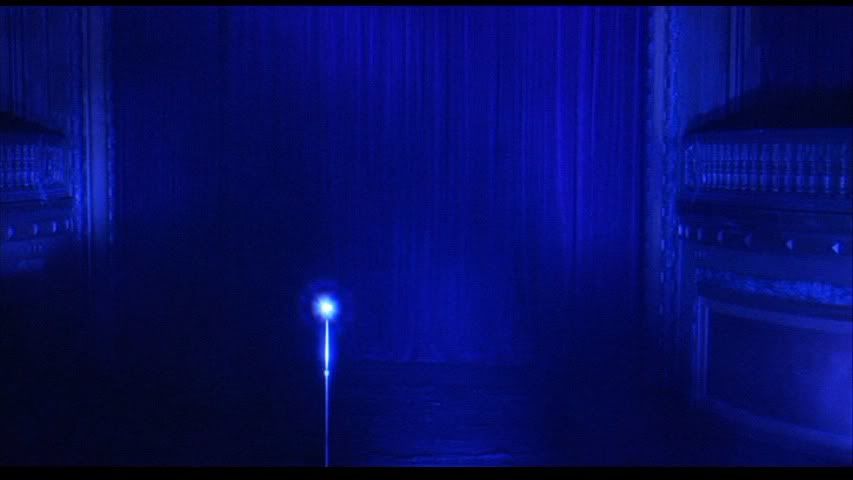
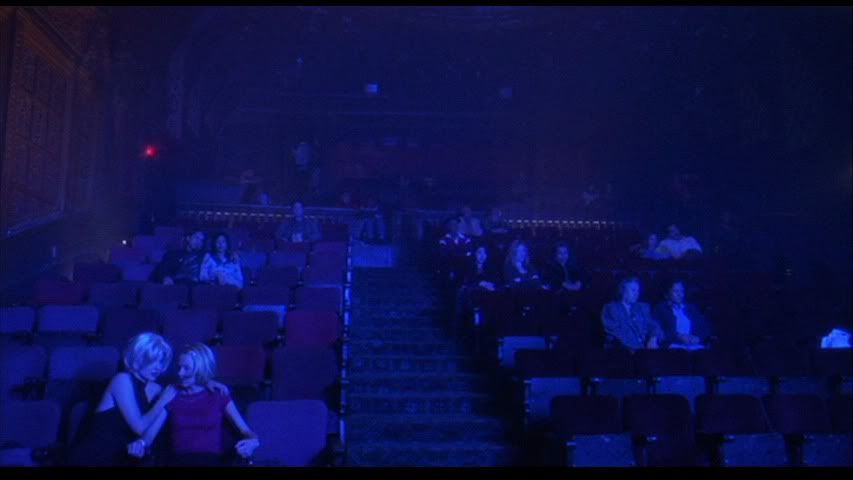
In "Mulholland Drive" by David Lynch, once again, in the “Club Silencio” sequence, it starts being bathed in a blue light as soon as the man who presents the act of the show disappears into smoke and the whole ambient shifts. The shot right after seems to give the indication that the scene could be playing underwater with the criss crossing of blue highlights throughout the stage and onto the audience. When this transitions into a “normal” atmosphere once more, it is known and felt that something is going to happen that will completely shift the balance between the two female characters, Rita and Betty. This play with light and colour, offers the scene a dream-like feeling that makes the audience stop and think if this action is actually happening or if it is all part of a dream. And regardless of their answer, there is also the question of how this affects Rita and Betty’s friendship.
The Marquise Of O

In "The Marquise Of O" by Eric Rohmer, is the story of a young woman who is known as the Marquise, a widow with two young children. When she encounters a young Russian Count her life changes unexpectedly.
In the scene where the Marquise is being attacked by Russian soldiers, the Count appears on top of a hill. The actor has a back light on him as to make him stand out in the night and even without being able to completely see his face in that moment, the audience is given the impression that he is the hero of the story about to save a poor damsel in distress. Yet we come to discover further into the story, that he actually rapes her in her sleep and leaves her with a child that she can’t comprehend how it came to be. Here is a perfect example of how proper lighting may lead the audience astray with giving false truths about a character.

The Conformist

In "The Conformist" by Bernardo Bertolucci there is a scene where Marcello and Anna, recently engaged, are on the train is yet another perfect example of how the play on light and colour can shift the atmosphere between two characters quite so effectively. To fully understand this, some back story on the characters is needed: Marcello wants to be married because he feels the need for some stability and normalcy in his life and a young Anna Quadri seems to be good enough to achieve that. Yet Marcello, at least at the beginning, didn't feel any love for her and only looked at her as a way to achieve his goal to marry. He looked at her and only saw an uncultured and naive young woman who didn't have much to offer but was sensual and attractive enough to warrant a marriage. So when the scene of the two of them on a train to Ventimeglia is shown, something happens that changes their dynamic. Anna decides to tell Marcello of a time where she was abused for six years by an older family friend and the moment she begins the describe each of the older man’s actions towards her, the light shifts to a warmer/orange almost amber tone, at the moment Marcello starts to recreate the steps of the sexual assault that happened to her. But there was something compassionate about the way Marcello handled the situation since he was trying to give Anna new memories that could overshadow how the real loss of her virginity happened at the young age of 15. This was such a romantic gesture on his part and quite unexpected since it was the first time the audience could see that he actually cared for Anna far more than he let on.
The comparison between the use of the amber light in “The Conformist” against the way “Eraserhead” used it is that both are served to introduce a somewhat of a hopeful future for the characters. Since in “The Conformist”, the warm tones serve as an indication that there might still be hope for a happy marriage between Anna and Marcello whereas in “Eraserhead”, the appearance of the Lady in the Radiator may serve as a beacon of hope for Henry mental stability and possible absolution for his later sins.
The Great Beauty

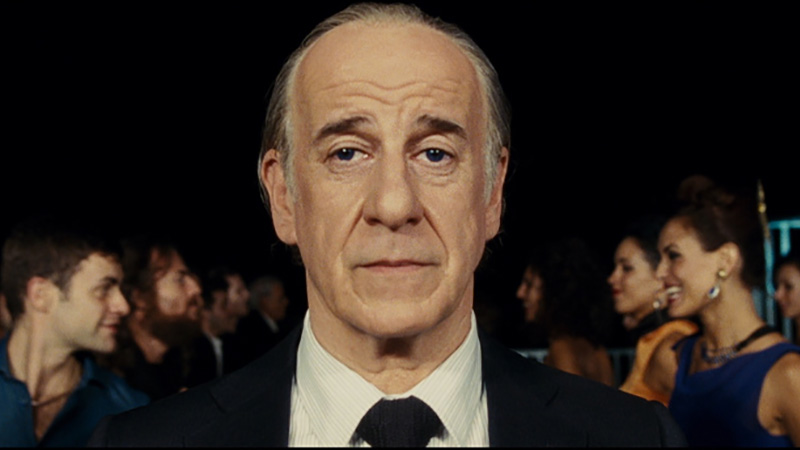
In "The Great Beauty" by Paolo Sorrentino, the sequence where Jep revisits his adolescent self, the scene is bathed in a blue glow reminescent of an earlier and happier time in his life before it all changed. He remembers that time and part of him wishes he would've tried everything to get the girl of his dreams instead of letting someone else have her and having to live a life of mild success whilst being the "King of the high life", all without love. Whenever the image of this beautiful, young woman appeared, it was understood how much Jep wanted to have had a life with her that might have been happier than his one is right now.

To summarize, each of the different ways these films used lighting to their advantage and to bring forward a specific emotion or to showcase the importance of a character makes me realize even more the importance lighting possesses in a scene and to master it easily is an asset to a story. For me, I would love to be able to properly light actors and sets for when I do a noir style of a film because they used lighting in such a way that it evoked mystery and drama. I love how in “The Conformist”, the mood changed immediately as the colour of the scene changed. Or how in “Eraserhead” the Lady in the Radiator came from darkness and she was the only person visible in the entire set. These little things add up to different levels of intensity that can serve to add more layers to the story about to be portrayed on screen.
Bibliography
Brown, B. (2012) Cinematography: Theory and Practice, Image Making for Cinematographers and Directors, 2nd Edition, Elsevier Inc: London